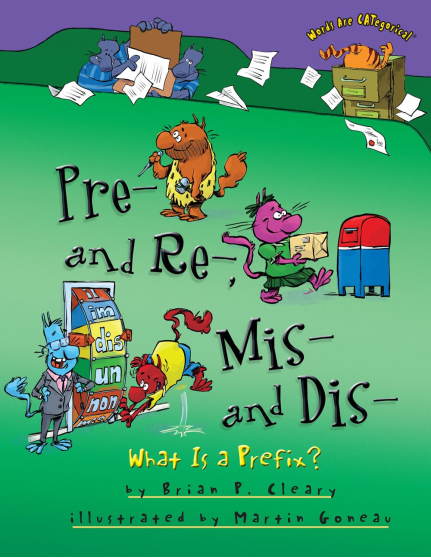
Pre- And Re-, Mis- And Dis- What Is a Prefix
Pre- And Re-, Mis- And Dis- What Is a Prefix
Language is one of the most fascinating tools humans use to communicate ideas, emotions, and knowledge. English, in particular, is full of building blocks that help shape the meaning of words. One of the most powerful tools in this language-building process is the prefix. A prefix is a group of letters added to the beginning of a word to change its meaning. Understanding prefixes not only helps students improve their vocabulary but also deepens their comprehension skills. Among the most common and useful prefixes in English are Pre- And Re-, Mis- And Dis- What Is a Prefix — a topic explored beautifully in the educational book with the same title.
This book is designed to help learners grasp how small word parts can completely transform meaning. It is especially helpful for young students who are beginning to explore the structure of the English language and want to develop confidence in reading, writing, and spelling. By focusing on the prefixes pre-, re-, mis-, and dis-, the book provides an engaging and simple introduction to how prefixes function and how they can alter a word’s sense.
Understanding What a Prefix Is
A prefix is placed at the start of a base word (also known as a root word). When you add it, the word’s meaning shifts, sometimes subtly and sometimes dramatically. For example, if we take the word “do” and add “re-,” we get “redo,” which means to do again. Similarly, adding “dis-” to “agree” forms “disagree,” meaning not to agree. These small changes help create new words and express new ideas — a concept that Pre- And Re-, Mis- And Dis- What Is a Prefix introduces in a fun, learner-friendly way.
Prefixes are like keys to unlocking word meaning. Once students understand them, they can decode unfamiliar vocabulary with ease. The book takes this principle and transforms it into practical exercises and explanations that make learning enjoyable.
Exploring the Power of Pre-
The prefix pre- means “before.” It is used in many common words such as preview (to view before), predict (to say before), and prepare (to make ready before something happens). Learning this one small prefix opens the door to understanding dozens of English words. For young learners, recognizing that pre- means before helps them quickly grasp what new words mean in different contexts.
In Pre- And Re-, Mis- And Dis- What Is a Prefix, the concept of pre- is explained through relatable examples and simple word exercises that encourage students to use their imagination. For instance, they might be asked to write a short paragraph predicting what will happen next in a story — reinforcing the meaning of pre- through creative practice.
Understanding Re- and Its Uses
Next comes re-, one of the most frequently used prefixes in English. It means “again” or “back.” Words like rewrite, rebuild, and return all use this prefix to express repetition or reversal. Once students understand this pattern, they can easily identify similar words and their meanings.
The book Pre- And Re-, Mis- And Dis- What Is a Prefix makes learning re- especially interactive. It invites learners to think of actions they can do “again,” such as replay a favorite song or redo an assignment. By applying what they learn to real-life situations, students gain a practical sense of how language works beyond the classroom.
Diving into Mis- and Dis-
While pre- and re- often indicate time or repetition, mis- and dis- focus more on negativity or error. The prefix mis- means “wrong” or “badly.” Words such as misunderstand, misbehave, and misplace show how adding mis- changes the entire meaning. It introduces the idea of a mistake or incorrect action.
Similarly, dis- often means “not” or “opposite of.” It’s used in words like disagree, disappear, and disconnect. These prefixes help learners understand how to form opposites or express contrast.
Pre- And Re-, Mis- And Dis- What Is a Prefix carefully illustrates these ideas using stories, colorful visuals, and exercises that help young minds recognize patterns in language. For example, a child might be asked to match words with their meanings or identify which prefix fits best in a sentence. These activities make abstract concepts concrete and easy to remember.
Building Stronger Vocabulary Skills
One of the greatest benefits of studying prefixes is vocabulary expansion. English contains thousands of words built with prefixes. By mastering just a few, students can understand many more words without memorizing them individually.
In Pre- And Re-, Mis- And Dis- What Is a Prefix, this principle is at the heart of every chapter. The book teaches children to see language as a puzzle — one where prefixes, roots, and suffixes are the pieces. Once they learn to connect those pieces, they can unlock meanings, spell more accurately, and express themselves more effectively.
Comments (0)