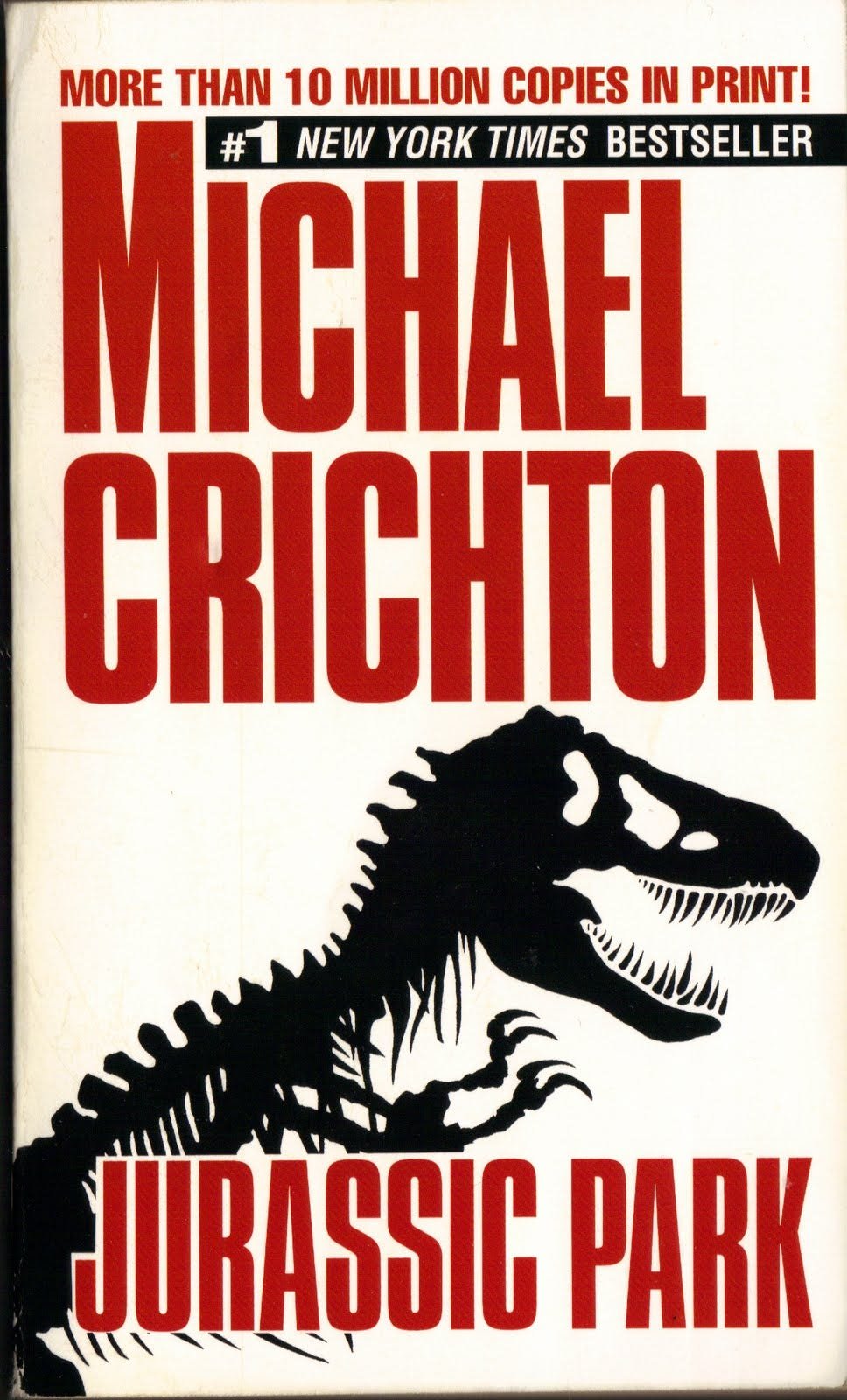
Jurassic Park
The Book link is given below:
Few stories have changed the landscape of science fiction quite like Jurassic Park. Written by the brilliant author Michael Crichton and first published in 1990, this novel redefined what it means to mix science, adventure, and pure suspense. It’s a thrilling blend of imagination and scientific possibility that makes readers question the limits of human innovation — and the consequences of playing with nature.
Before it became a blockbuster movie franchise, Jurassic Park was a groundbreaking novel that explored the ethics and dangers of genetic engineering. Even decades later, its story feels just as relevant as ever, warning us of the fine line between scientific progress and moral responsibility.
If you’re fascinated by stories that combine cutting-edge science, thrilling adventure, and deep philosophical questions, then Jurassic Park is a must-read. You can even experience this classic by downloading Jurassic Park as a free PDF book and diving into the world that brought dinosaurs back to life.
A Story That Redefined Science Fiction
The story of Jurassic Park begins with a simple but breathtaking idea: what if dinosaurs could be cloned using ancient DNA? On a remote island off the coast of Costa Rica, a wealthy entrepreneur named John Hammond and his company, InGen, create a massive theme park filled with living, breathing dinosaurs. Using advanced genetic engineering, they manage to resurrect species that walked the earth millions of years ago.
To ensure the park’s safety and scientific integrity, Hammond invites a group of experts — Dr. Alan Grant, a paleontologist; Dr. Ellie Sattler, a paleobotanist; and Dr. Ian Malcolm, a mathematician and chaos theorist — to visit the island and give their approval.
However, what begins as a scientific wonder quickly turns into a nightmare. When the park’s security systems fail and the dinosaurs escape, the visitors find themselves in a desperate fight for survival. The novel becomes a heart-pounding race against time, filled with suspense, danger, and moments of awe that remind readers just how small humanity is in the face of nature.
The Genius of Michael Crichton
Michael Crichton was not only a novelist but also a trained physician and a thinker deeply fascinated by technology and its impact on society. In Jurassic Park, he combined his scientific knowledge with storytelling brilliance to create a narrative that feels both believable and terrifying.
The novel’s scientific details are so convincing that readers often forget they’re reading fiction. Crichton carefully explains how scientists might extract dinosaur DNA from preserved mosquitoes in amber and fill in the missing genetic gaps with modern DNA. The idea is so well-presented that it feels entirely plausible — and that’s what makes it so chilling.
But beyond the science, Crichton’s real genius lies in his ability to ask profound ethical questions:
- Should humans revive extinct species just because they can?
- What responsibilities come with scientific power?
- And most importantly, what happens when nature refuses to be controlled?
These questions make Jurassic Park not just a thrilling story but also a cautionary tale about human arrogance and the unpredictable nature of life.
The Characters That Bring the Story to Life
While the dinosaurs are undoubtedly the stars of the novel, the human characters in Jurassic Park give the story its emotional and intellectual depth.
- Dr. Alan Grant represents curiosity and respect for nature. His awe and fear mirror the reader’s reaction to seeing the dinosaurs come alive.
- Dr. Ellie Sattler provides empathy and insight, grounding the story in human emotion.
- Dr. Ian Malcolm, with his famous “chaos theory,” delivers one of the most memorable warnings in fiction: that systems as complex as life itself can never be fully controlled.
And then there’s John Hammond, whose vision of a park “where the past comes alive” turns into his downfall. His obsession with profit and progress blinds him to the dangers he’s unleashing — a theme that still resonates in our technology-driven world today.
Themes That Still Matter Today
What makes Jurassic Park timeless is its exploration of themes that go far beyond dinosaurs. It’s a story about hubris, the danger of underestimating nature, and the illusion of control.
Even in today’s world, where genetic engineering, cloning, and artificial intelligence are real discussions, Crichton’s message feels more relevant than ever: just because we can do something doesn’t mean we should.
The novel also celebrates the beauty and power of science while warning against its misuse. It’s a delicate balance between curiosity and caution — a theme that keeps readers thinking long after the final page.
Why You Should Read Jurassic Park
Whether you’re a science fiction fan, a lover of adventure, or someone interested in ethical dilemmas, Jurassic Park offers something for everyone. Its mix of action, intellect, and imagination makes it one of the most exciting and thought-provoking novels ever written.
Reading it today is just as thrilling as it was when it first came out — especially for those who have only seen the movies. The book dives deeper into the characters, science, and philosophy that inspired the global phenomenon.
You can easily revisit this masterpiece by downloading Jurassic Park as a free PDF book and exploring the story that changed how we think about science and storytelling forever.
Final Thoughts
Jurassic Park is more than a science fiction novel — it’s a powerful warning about human ambition and the unpredictability of nature. Michael Crichton’s blend of believable science, gripping suspense, and philosophical depth makes it one of the greatest literary achievements of the modern era.
It’s a story that reminds us that life, no matter how much we try to control it, always finds a way.
So, if you’re ready for a journey through science, danger, and imagination, don’t wait — download Jurassic Park as a free PDF book and experience the thrill of a world where dinosaurs once again walk the earth.
Comments (0)